Why money is the worst possible motivation for anything creative.

I have officially been active on Substack for 1 year!
Oh wait, quite the opposite….

Before I go any deeper, I'd like to highlight that I am very happy with my 41 subscribers. It took me 8 months to hit double figures in subscribers, and I am beyond honoured that 41 people want my articles sent to their inbox each week.
But it's very easy for social media (and whether we want to believe it or not, Substack is social media) to give some arbitrary goal for taking on the challenge of writing an article each week. To convince you that the reason to do anything is for the big money, and even bigger success of doing it, rather than the simple joy of the journey. Or the personal benefits that might be unique to you from completing a challenge.
Every decision you make in business, and in life, needs to have a motivation behind it.
The worse the motivation, the less likely you are to succeed. And unfortunately, money alone is often pretty rubbish motivation.
What is Drive?
One of my #1 non-fiction book recommendations is Drive, by Dan Pink.

In it, Pink introduced me to the candle problem, devised in 1945 by a German psychologist Karl Duncker.
Forgive me if you are a psychologist yourself, because I am going to paraphrase the study, perhaps quite badly, to help illustrate the point.
In the study, participants were seated at a table next to a wooden wall and handed three items: a candle, a box of drawing pins (tacks for those of you in the US), and a pack of matchsticks. They were tasked with attaching the candle to the wall so the wax doesn't drip onto the table.
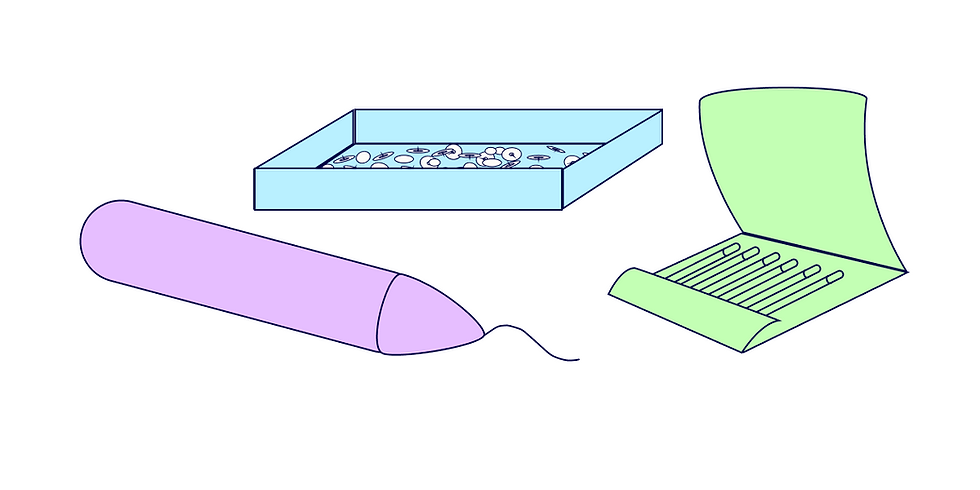
Most people start by trying to pin the candle directly to the wall or even melting wax to use that as an adhesive.
But the solution is to empty the drawing pin box, pin the box to the wall, and use it as a platform for the candle.

The box had a dual purpose, but because it arrives in the experiment as a container for drawing pins, most participants couldn't see beyond that first function.
Over a decade on in 1962, a researcher named Sam Glucksberg used the same task to test motivation.
He split people into two groups: one he simply timed, the other he offered $5 to finish in the fastest 25%, and $20 to be fastest overall. And perhaps surprisingly, the paid group took 3.5 minutes longer on average.
Having a monetary reward actually narrowed their creativity and made them worse at thinking, quite literally, outside the box.
So to keep testing that point, Glucksberg then ran the test again, but this time with the box empty and the pins laid out separately. Basically laying the solution out in front of them.
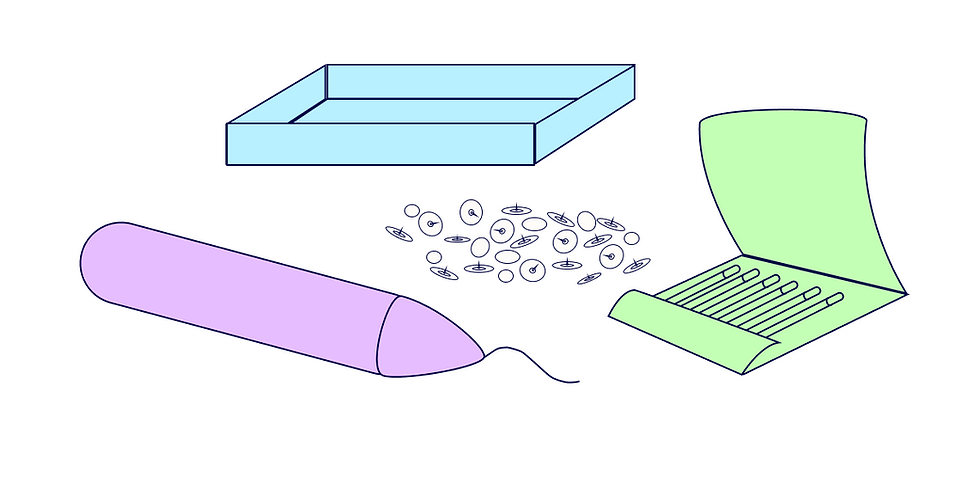
Of course, both the paid and non-paid groups now solved it faster. But this time the paid group won by a mile.
The study concluded that if you have a straightforward task ahead, money is a great motivator for speed. But if you're trying to do something more complex, or anything even slightly creative, money is not an effective motivator.
In the business context: you can of course pay an assistant to nail the easy parts of your business. But when building the thing yourself takes real thinking, like seeing how a container can be a candle stand, you're going to need motivation beyond the internet's income claims.
What's my Drive?
If I'd started Substack with a primary goal of making any level of income in my first year, this would be my last article.
Or I would've ended up writing about 'how to grow on Substack' as a quick win and might've made some money, but all my articles would've been fundamentally boring.
I've made £0 and don't expect that to increase by 18 months in. But I also don't think at least the majority of my articles have been boring. So a win?
Either way, I started Substack to:
The motivation behind the challenge of writing, for me, is so much more than any financial gain. And that is the only sort of drive that's going to get me through spending multiple hours every single week writing an article.
What's your Drive?
So how do you find your own motivation for whatever challenge you have ahead?
As an annoyingly abstract answer, motivation is different for everyone.
But think about your long-term goal, besides the cash. Where do you want to be in 1 year, 3 years, 5 years? And what skills do you need to get there?
Is that something you need to learn from scratch, or get better or more confident at?
That right there is the best motivation.
To reach my 5-year goal (including financial aspirations), I know I need to get better at writing and learn more about the broader business world to be more confident in my specific take on it. And that's what weekly Substack writing is helping me with.
So what's your version?


