A new chapter for founder-led brands
- Lucy

- Oct 28, 2025
- 8 min read
Updated: May 22
With the launch of season 2 of Molly-Mae’s documentary, there’s been another wave of conversations about founder-led brands and their place in the modern market. This year especially, my social feeds have been full of influencers turning entrepreneurs and new brands pushing their founder-led stories and BTS as their main marketing strategy.
Sult, co-founded by influencer Milly Goldsmith, is a prime example of both. Promoting Milly as the face and founder of the brand and utilising her large audience (621k followers at the time of writing) to advertise her new electrolyte business. When Sult already has 30k followers of their own and has sold out on some of their key lines at first launch, it’s hard to argue that the creator-entrepreneur angle isn’t an assured success.

Last week it also kicked off again with the infamous rivalry between Hailey Bieber (founder of Rhode) and Selema Gomez (founder of Rare Beauty), with Bieber saying in an interview that “I don’t feel competitive with people that I’m not inspired by.” Regardless of whether it’s really necessary to be still pitting these women against each other over a man (it’s not), they’re both incredible examples of the success of putting a well-known face behind a brand, at perhaps one of the most extreme levels.
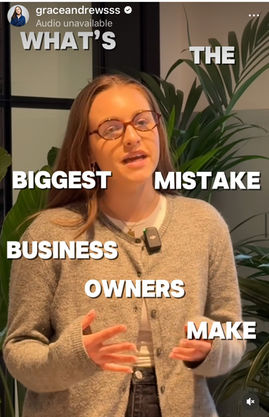
And in my current YouTube-obsession phase, I’ve been following Grace Andrews (formerly at Diary of a CEO), who champions the creator economy and talks about how more people than ever are becoming “creative entrepreneurs”.
In short, there’s more talk than ever about founder-led brands, and no one can dispute their upside. The strategy is based on “real people with real stories”, which is proving to be a great way to cut through the noise in a saturated world. But with more and more people trying to become the next Aimee Smale of Odd Muse, showing yourself as the founder is no longer enough. Being the face of the brand, or posting behind-the-scenes breakdowns of what went wrong doesn’t automatically build connection or durability. Instead, when done poorly, it can feel performative or dependent.
So instead, we have to question what’s next for founder-led strategies?
Historically, founder-led has outperformed
Before we go further, it’s worth clarifying what I actually mean by ‘founder-led’. A founder-led business isn’t just one that was started by a founder (that’s literally every business out there). It’s one where the original creator still has meaningful influence over the product, brand, or decision-making. And where the founder is still intrinsically linked to the brand. For example, when I think about Odd Muse, I think about Aimee Smale. If I think about Gymshark, I think about Ben Francis. If I think about Maebe, I think about Molly-Mae. All of these founders are closely tied to their brand, as they show up in marketing, design decisions, and likely the pitch decks. The founder’s values and instincts are still visible in the work.
Historically, these instincts have paid off.
Companies with deeply involved founders were found to “perform three times better than non-founder-led companies over a 15-year period”. Linking that edge to product intuition, faster decision making, and “skin in the game”.
Well-known founders tend to reinvest more, pivot faster, and protect quality because their identity is tied to the outcomes. Unsurprisingly, when your name is literally on the door, you’ll think differently. As Ben Horowitz puts it “founders are emotionally attached to their mission” and that conviction “created clarity of purpose that attracts talent and customers alike.” Founders have more to lose, and that urgency shows.
Emotional conviction has long been one of the greatest assets a brand can have. It’s why the founder-led label became a shorthand for authenticity and longevity. But over the last few years, that advantage has started to blur.
This great article here talks about how the “founder premium” (the performance gap between founder-led and traditionally managed businesses) is narrowing. As investor confidence shifts towards operational discipline and governance, the halo of being founder-led alone no longer guarantees superior returns. Founder influence still matters, but so do structure, systems, and strategy. All the more ‘traditional’ approaches that can easily be put aside if you rely too heavily on the promotion of your founder alone.
And it’s a whole separate issue when you then want to grow that business beyond the founder. I haven’t watched Molly Mae’s documentary (and it’s probably something I will never get around to), but online comments mention her wanting to grow Maebe beyond her personal brand. To make the business bigger than her. Which is precisely what many companies are looking to do. The opportunity ahead isn’t to abandon the founder story, but to embed it more intelligently so that it’s part of a broader ecosystem rather than the entire engine. Shifting from founder-led to brand-first, but founder-present.
Like this? I’d love if you subscribed!
What’s beyond being founder-led?
For all those good reasons, we’ve spent years telling entrepreneurs to put themselves out there and share the behind-the-scenes of building a business. “Show the real you” and “be vulnerable” are still the top founder advice I see popping up on my TikTok feed. And yes, I do agree that founder visibility matters. But it’s about showing what’s useful for your customers, rather than just generally more of you.
In my view, if you want a brand to outlive you as a founder, there are three non-negotiables: strong brand IP, a community-led narrative, and operational candour. Let’s take them one by one.
Strong visual identity
A sustainable business needs to be brand-first. That means your name and story can be the amplifier rather than the core philosophy. Someone should be able to discover your brand with no idea who you are, and it should still make sense, resonate, and connect with them. The distinct combination of your brand’s visual identity, tone of voice, and product stories should still create recognition without requiring your presence.
With the Maebe launch, “Molly-Mae’s influence powered Maebe’s debut, but long-term success will depend on brand identity beyond her persona.”

Founder stories, especially when from a well-known person or a strong personal brand, can reach that audience, but you need to build a brand separate from the founder to capture the rest of the world outside their bubble.
Community
One of the strongest angles of being founder-led is the storytelling that can then go into the branding. But when the storytelling is all down to one person, that benefit can be taken away at any point. Sheer Luxe is one of my favourite examples of a community-led platform that draws on a mix of colleagues, rather than positioning just one person as the face of the brand. They have such a strong visual identity, tone of voice, and approach to their videos that you can see a video and instantly know it’s from Sheer Luxe, even if you don’t recognise the speaker in that particular reel.
This can also be achieved by bringing the audience into the conversation. So many influencer brands talk at their audience instead of with them. But when you’re looking to grow beyond your own audience, people want to build with you rather than just watch a person build their own thing. When community storytelling becomes part of your operating system, the founder can stop being the bottleneck for the content and connections you need.

Honesty and authenticity
Honesty about the work itself is the most crucial aspect. Ironically, so many of the brands preaching about being “authentic” are likely not being honest in their own content. Posting numerous angles about how hard things are, which all feel suspiciously polished. Or about a mistake that cost them 20k, without acknowledging how out of touch that is to their audience. People don’t just want to hear how hard it is for you. If they’re following along to be inspired by you, you need to encourage and provide that value exchange in the relationship. Sharing how and why decisions are made. The trade-offs, the pricing rationale, the breakdown of how processes have changed.

With the rise of “strategic self-branding”, audiences can now quickly detect when vulnerability becomes performance. And the obsession with authenticity has started to backfire. It’s not that people don’t want to see the real side, but it needs to be of genuine use to them. Sharing how you got out of the tough point, so they can learn from it themselves, rather than just being in a tough point. Sharing the challenge you faced and the decision you made because of it. The thinking behind the journey is far more valuable to your audience than just a top-line reel of it.
None of this is to say that the founder should disappear entirely. Quite the opposite. I’m always in favour of putting faces to brands, although lately social media has convinced us that this is the only way to build trust. And for that to be a genuinely successful tactic, your audience needs to know what you stand for, what you’re building, and how it improves their lives.
So how can you transition to brand-led?
One of the most complex parts of building a founder-led brand is learning when to step back. For most, a business starts as an extension of who you are. But as you grow, the challenge will be to protect your company’s soul without becoming the bottleneck. So when you’re reaching that decoupling phase:
1. Define your visual identity
Literally write down everything that defines your brand’s tone, values, and visual principles. The stories you tell and how you show up. Often, people think that it’s the founder’s face that people relate to, but as humans, we recognise colours, styles, tones, so much more than faces. You can preserve the authenticity a founder may have created by simply breaking down what your visual identity is and how you can consistently reproduce that.
2. Rotate spokespeople
One big mistake many brands make is having a single spokesperson for their social channels. Whilst I’ve just said people don’t relate to a face alone, it still is an essential factor. Be it your founder or your social media manager, it will never harm you to mix up the faces you display, and it will only benefit you if one of them then wants to step back. Bring in your team, customers, suppliers, and anyone who contributes to making the business real. It will decentralise visibility and give your audience multiple entry points for connection, while avoiding the parasocial fatigue that comes when a single founder’s face dominates every feed.
3. Document your playbook
There’s so much more to marketing and strategy than just having your founder post videos to social media. How do you make choices? What do you prioritise? What are your non-negotiables? How your brand works off camera is more important than how you behave on camera if you’re looking for long-term success. It’s easy to get lost in marketing success, particularly at the start of a business journey, but you need to have something worthwhile to offer the audience you attract.
The founder-led movement has done incredible things for business, and it’s not going anywhere. It’s made brands more human, more transparent, and more connected. But it’s evolving.
So next time you go to post about how tricky your business is, try to think about what you can teach your audience from that experience instead. And if you’re looking to grow your brand, don’t let your previous founder edge be the thing that holds you back.
Like this? I’d love if you subscribed!


